2026-10-24 ·
How to Check for Creosote Buildup After a South Jersey Winter
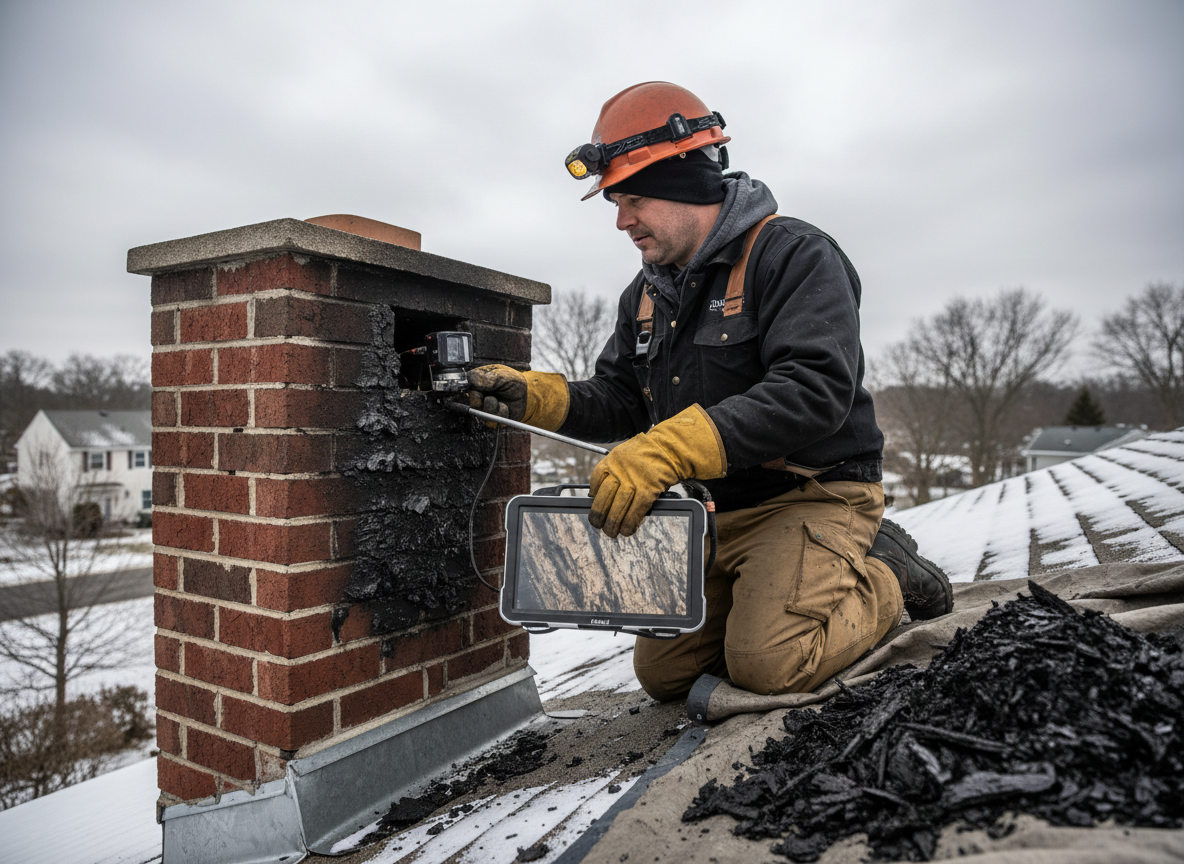
After a South Jersey winter, check for creosote buildup by shining a bright flashlight up the flue from the fireplace or cleanout door and looking for black, shiny, or flaky deposits thicker than 1/8 inch. Gloucester brick homes built before 1960 often have straight flues that trap more tar during repeated cold starts and low-temperature burns common from December through February. If the layer feels sticky or exceeds 1/4 inch in any section, stop using the fireplace until a professional removes it.
Why South Jersey Winters Increase Creosote Risk
Gloucester City sits along the Delaware River where freeze-thaw cycles and frequent 20–30 degree swings keep chimney temperatures fluctuating. Wood stoves and fireplaces in older neighborhoods like West Gloucester and Magnolia run cooler on damp days, allowing volatile gases to condense into Stage 1 and Stage 2 creosote. The river humidity adds moisture that mixes with soot, forming a harder glaze that expands when temperatures drop below freezing. These conditions repeat every winter, so annual checks after the last fire become essential for homes on streets such as Cumberland and Broadway.
Tools and Safety Steps Before You Look
Gather a strong LED flashlight, a chimney mirror or inspection camera, a dust mask, and gloves. Turn off the furnace and wait 24 hours after the last fire so the flue cools. Open the damper fully and place a drop cloth in the firebox. From inside the house, aim the light upward and move the mirror to see 8–10 feet into the flue; note any narrowing or heavy black coating on the north-facing side where cooler air lingers. Never climb onto the roof without proper fall protection.
What Different Creosote Layers Look Like
Stage 1 appears as thin, flaky soot that brushes off easily. Stage 2 shows as a dark brown or black tar that feels sticky and requires more than a standard brush. Stage 3 forms a hard, shiny glaze that can ignite at 450 degrees and is common in Gloucester chimneys after repeated low burns during January cold snaps. Measure thickness at three heights: near the smoke shelf, mid-flue, and just below the crown. Any section over 1/8 inch needs removal before spring humidity sets in.
When to Schedule Professional Help
If deposits reach 1/4 inch or you see cracks in the flue tile, contact a local technician right away. Homes in East Gloucester and Riverdale often need chimney cleaning service followed by an inspection to check liner condition. Pair the cleaning with chimney inspection service to spot mortar damage from winter expansion. Delaying removal raises the chance of a chimney fire that can crack brickwork already stressed by Delaware River freeze-thaw cycles.
Next Steps After the Inspection
Document photos and measurements for your records. Schedule any required work before April rains arrive, as water entering unchecked creosote accelerates corrosion. Older Gloucester brick homes also benefit from reviewing fixing draft problems in older Gloucester brick homes and planning liner checks outlined in when to schedule chimney liner replacement in New Jersey. Consistent post-winter checks keep flues clear and reduce emergency calls during the next heating season.