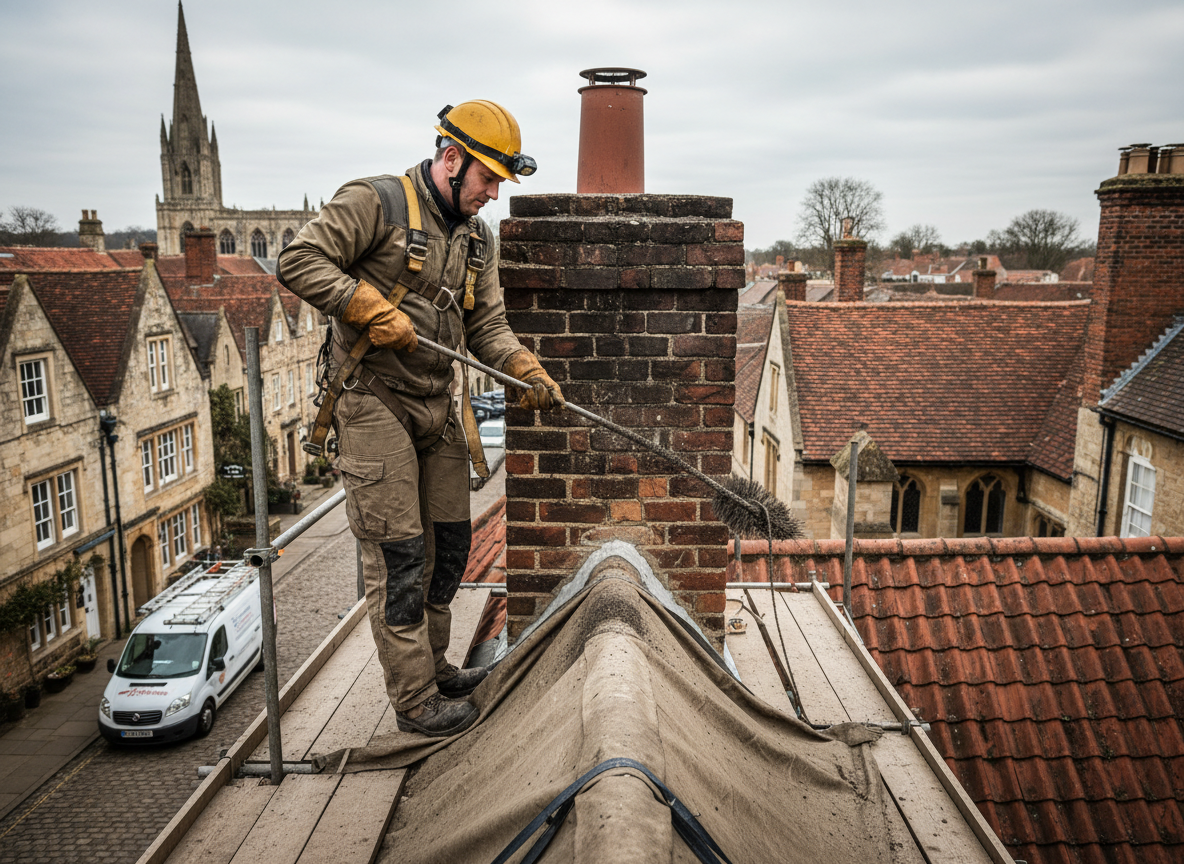
Gloucester City homes built before the 1960s often feature single-wall brick chimneys tied into coal or oil furnaces that later converted to gas. These stacks sit exposed to Delaware River humidity that drives moisture deep into mortar joints. Annual maintenance starts with a Level 1 inspection that checks flue tile alignment, crown condition, and spark arrestor screens while noting any settling cracks caused by the area's clay-heavy soils.
Creosote from wood-burning fireplaces condenses faster here because winter nights drop below freezing while daytime temperatures swing twenty degrees. A proper maintenance visit removes the glazed third-stage creosote that standard brushes miss, then treats the flue with a sealant rated for the high-sulfur deposits left by local heating oil use. Homeowners who skip this step frequently discover blocked flues when a sudden cold snap forces heavy fireplace use.
We also examine the chimney chase in Cape Cod and twin styles common along Cumberland Street and along the waterfront. These enclosed chases trap heat and accelerate rust on metal liners. During maintenance we photograph liner seams, measure draft with a manometer, and advise on when a stainless-steel reline becomes necessary before rainwater finds its way into the attic.
Seasonal Considerations
Spring maintenance catches winter damage from ice wedging before summer humidity sets in, while fall visits focus on clearing leaves and verifying damper function ahead of the heating season.
Technician insight
In Gloucester the thing that catches most people out with chimney maintenance is how quickly the Delaware River humidity works into the soft mortar of 1920s brick chimneys along Cumberland Street and the waterfront blocks. Homeowners think a quick brush is enough, but those joints need repointing every few years or water migrates straight into the attic during the first freeze-thaw cycle.
Row Home Chimney in Gloucester City
A 1938 twin on Market Street showed water stains on the second-floor ceiling after heavy spring rain. Inspection revealed deteriorated crown mortar and a cracked flue tile allowing runoff to track down the liner. We removed loose material, repointed the crown, installed a new stainless cap, and confirmed draft. No further leaks appeared the following winter.
How it works
- 1
Site Assessment
We arrive at the Gloucester City address and evaluate exterior condition, flue access, and any visible settling around the foundation.
- 2
Flue Cleaning
Rotary brushes and vacuum extraction remove creosote and debris without damaging tile liners common in pre-war homes.
- 3
Mortar and Crown Check
Joints are probed for softness and the crown is inspected for hairline cracks that allow water entry during coastal storms.
- 4
Draft Verification
A smoke test and manometer reading confirm proper draft before we reinstall the cap and document findings for the homeowner.
Pricing
Upfront quote provided after inspection; cost depends on chimney height, access, and creosote stage.