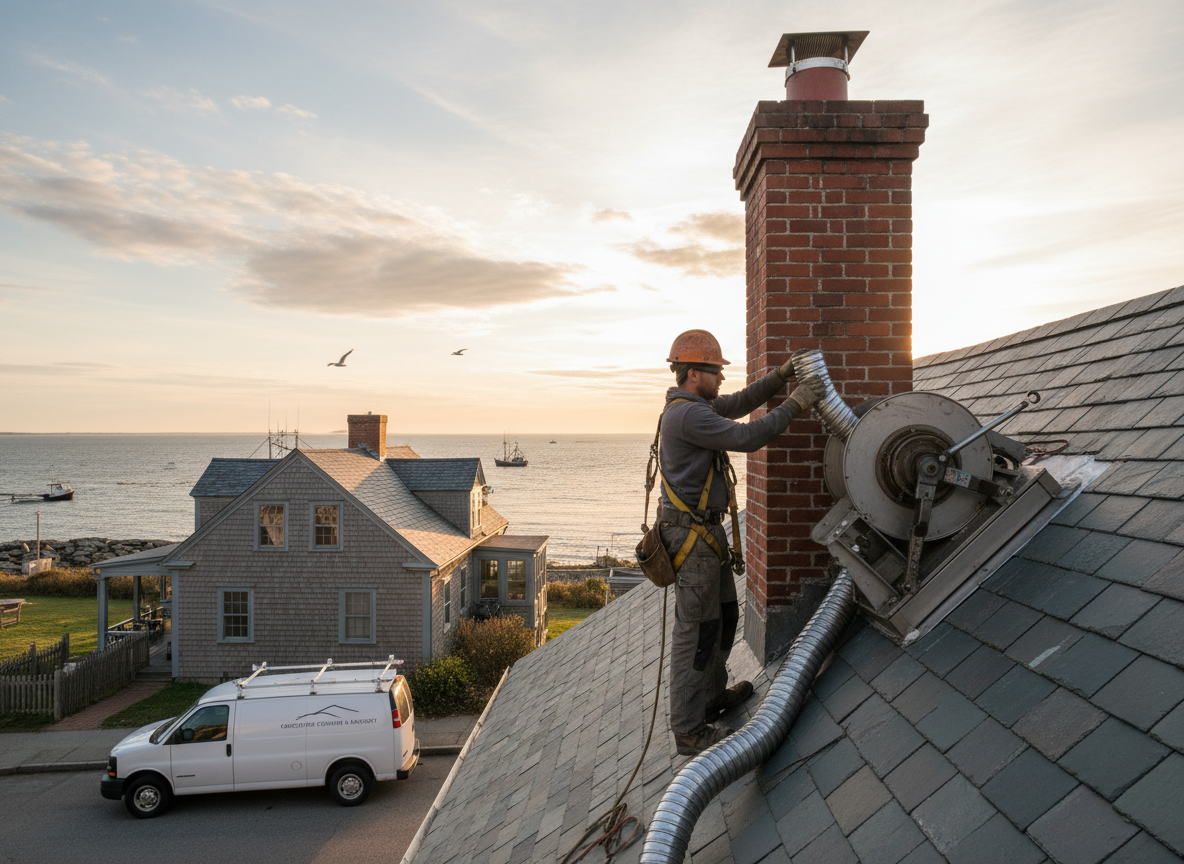
Gloucester City homes built before the 1970s often have unlined or clay-tile chimneys that crack from repeated freeze-thaw cycles along the Delaware River. Relining with stainless steel or cast-in-place materials seals the flue, stops creosote penetration into brick, and meets current NJ code requirements for fuel-burning appliances. Without it, water from winter storms and river humidity accelerates deterioration in attics and walls.
Edge cases appear when chimneys serve both oil and gas appliances or when offsets block standard liner insertion. In these situations, technicians must remove the old tile, camera-inspect every joint, and sometimes install flexible liners rated for the specific fuel type. Gloucester's narrow row-home lots also limit staging space, so crews work from rooftops using bucket trucks parked on Cumberland Street rather than large equipment.
Homeowners frequently discover the need during spring inspections after noticing white efflorescence on exterior brick or musty odors near fireplaces. Waiting until winter often forces emergency calls because blocked flues back up carbon monoxide. Proper relining includes a final smoke test and documentation for insurance purposes in Camden County.
Terrain near the river means higher groundwater, so exterior chimneys on older foundations can shift slightly each year. Relining crews account for this by using compressible seals at the top and bottom rather than rigid mortar joints that fail faster here.
Technician insight
In Gloucester, the thing that catches most people out with chimney relining is how river humidity and older brick foundations let moisture wick up from below, so a liner that stops at the smoke shelf often fails within two winters unless we extend the seal lower.
Row Home on Cumberland Street
Homeowner noticed draft issues and white powder on the chimney breast. Camera showed multiple cracked clay tiles and heavy creosote. We removed loose tile sections, installed a stainless liner with insulation, and sealed the top. Draft improved immediately and the musty smell disappeared.
How it works
- 1
Initial Camera Inspection
Technician climbs to the roof and runs a high-definition camera through the flue to map cracks, offsets, and creosote depth.
- 2
Flue Preparation
Old tile or debris is removed where possible, and the chimney is brushed clean to ensure the new liner bonds properly.
- 3
Liner Installation
Stainless steel or cast-in-place material is inserted and secured, with insulation added where required for clearance.
- 4
Final Testing and Cleanup
Smoke test verifies draft, connections are sealed, and all debris is removed from the property.
Pricing
Cost depends on chimney height, number of offsets, and liner material chosen; most Gloucester relines fall in the mid to upper range for masonry work.