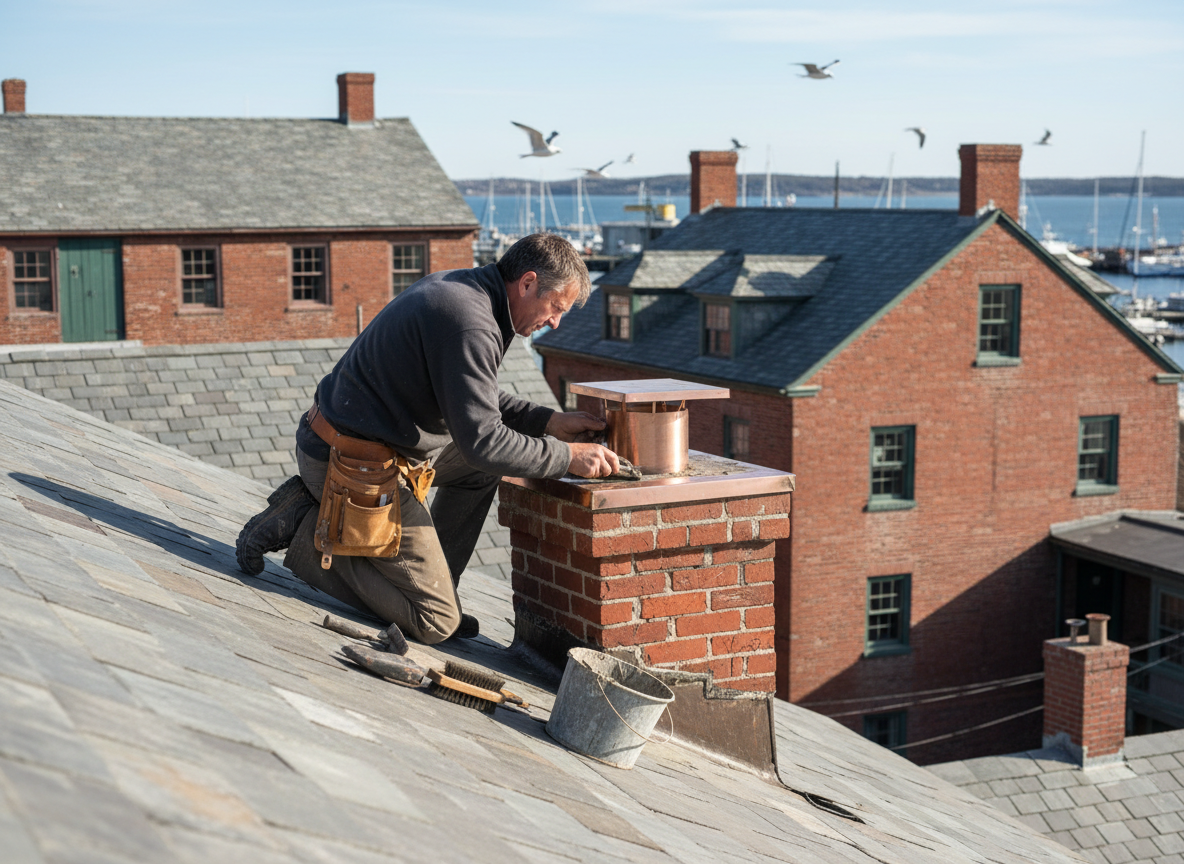
Chimney caps in Gloucester City homes often fail where the flue meets the crown on pre-1950 brick stacks common along Cumberland Street and in the Highland Park section. Moisture from the Delaware River accelerates rust on galvanized and stainless caps, allowing water to enter the flue and damage the clay tile liner below. We replace or rebuild caps using heavy-gauge stainless steel that resists the constant salt-laden air without adding weight that could crack aging mortar joints.
Access on Gloucester City row homes frequently requires staging on narrow side yards or shared driveways rather than open lawns. This changes the job because ladders must be footed on uneven brick pavers or against party walls, and debris must be contained so it does not fall into neighboring yards. We remove the old cap, inspect the flue crown for spalling, and reinstall with new flashing that ties into the existing step flashing rather than relying on caulk that fails after one freeze-thaw cycle.
Code requirements in Camden County call for caps that prevent downdrafts and animal entry while still allowing proper draft. We verify that the new cap maintains the required clearance above the roofline and does not restrict the flue opening on oil or gas appliances still in use in many Gloucester City basements. Homeowners notice the difference when wind-driven rain no longer pours down the chimney during nor'easters.
Technician insight
In Gloucester City the thing that catches most people out with chimney cap repair is how quickly river humidity rusts the old galvanized caps on the brick row homes along the waterfront blocks; homeowners think the cap is just sitting there until water starts staining the interior brick because the crown was never re-pointed when the cap failed.
Highland Park Row Home Cap Replacement
Water stains appeared on the second-floor bedroom wall after a heavy rain. We found the original galvanized cap rusted through at the seams and the crown mortar eroded. We removed the cap, repointed the crown, installed a new stainless cap with proper flashing tie-in, and confirmed no further water entry on the next rain event.
How it works
- 1
Site Assessment
We examine the existing cap, crown, and flashing from the roof and note any liner damage visible from below.
- 2
Cap Removal
Old cap and fasteners are taken off while containing rust flakes and mortar debris to protect the roof and yard.
- 3
Crown and Flashing Repair
Spalled areas are pointed and new step flashing is installed to integrate with the existing roof.
- 4
New Cap Installation
A properly sized stainless cap is secured and tested for draft before final cleanup.
Pricing
Cost depends on roof access, cap material, and any crown repairs needed. Upfront quotes provided on site.