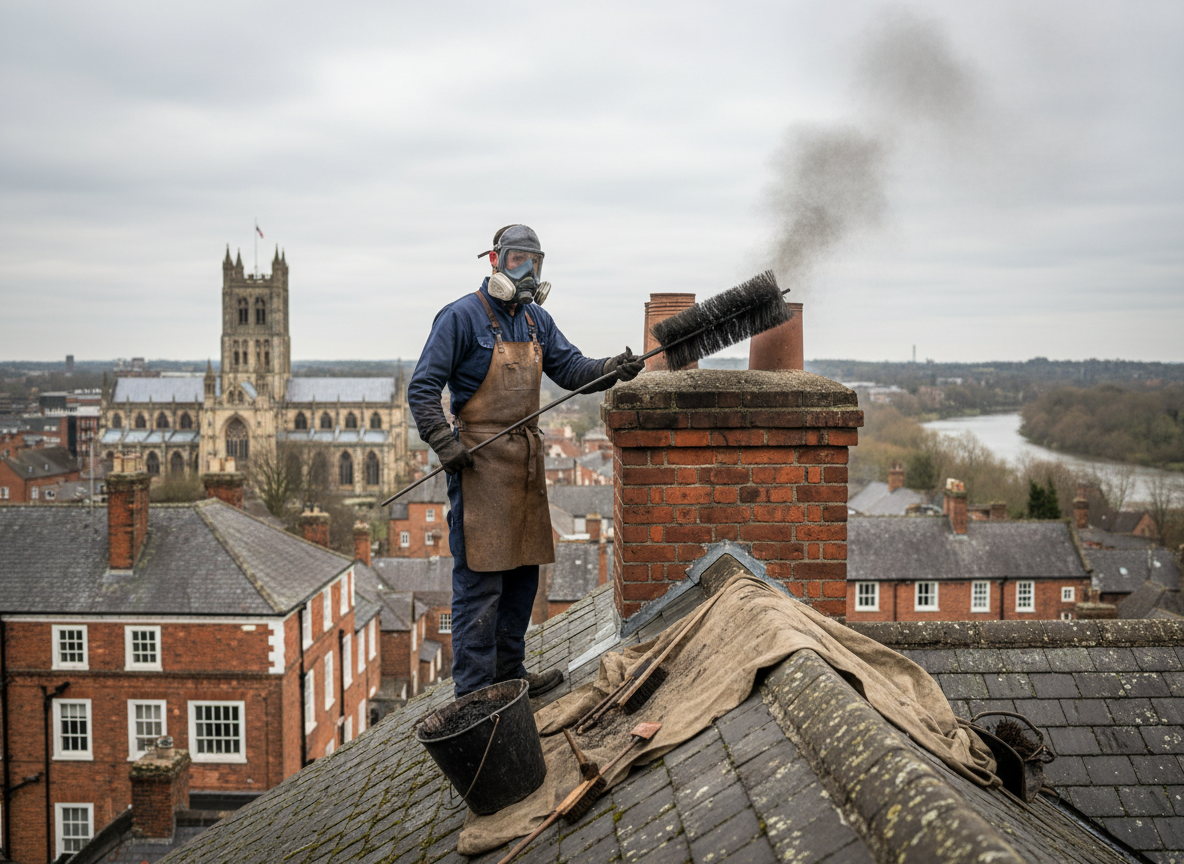
Gloucester City homes built before the 1960s often feature masonry chimneys tied into coal or wood stoves that have been converted to gas or oil. These flues collect dense creosote layers faster than newer installations because the original liners were not designed for today's appliance exhaust temperatures. Cleaning requires dropping chains or brushes from the roofline at 523 Cumberland St addresses and working around tight attic access points that are common in row homes along the riverfront neighborhoods.
Moisture from the Delaware River increases creosote acidity, which etches mortar joints and allows water to penetrate brickwork during freeze-thaw cycles typical in Camden County winters. A standard cleaning therefore includes a Level 1 inspection for cracks or spalling before any brushing begins. Homeowners in Gloucester and nearby Brooklawn frequently discover that skipping this step leads to hidden water damage behind plaster walls once the chimney is put back into service.
Edge cases in the Gloucester area include shared flues in duplexes where one side has been abandoned, creating backdraft risks during cleaning. Technicians must verify damper operation and confirm proper termination height relative to nearby roof peaks to meet current code. Work is scheduled around 24/7 availability to handle emergency blockages that appear during sudden cold snaps when residents restart dormant fireplaces.
Seasonal Timing
Cleaning before November prevents most winter callouts because river humidity keeps creosote moist and easier to remove in fall. Post-storm inspections after nor'easters are also common since wind-driven rain can saturate unused flues and accelerate deterioration.
Technician insight
In Gloucester, the thing that catches most people out with chimney cleaning service is how quickly river humidity turns light creosote into a sticky, acidic layer inside pre-1950 brick flues around Cumberland Street, making a single missed season turn into a much longer job.
Riverfront Row Home Flue Blockage
Smoke began entering a second-floor bedroom during the first cold night of the season. Inspection revealed heavy creosote bridging the flue in a 1930s brick chimney. The flue was brushed from the roof, debris removed from the cleanout, and the draft restored without further masonry work.
How it works
- 1
Initial Assessment
Visual check from roof and interior to note liner condition, creosote thickness, and access constraints typical of Gloucester City brick homes.
- 2
Mechanical Cleaning
Brushes and rods remove deposits from the flue while protecting surrounding masonry and avoiding damage to older mortar joints.
- 3
Debris Removal
Vacuum extraction of loosened material from the firebox and cleanout door to prevent re-entry into living spaces.
- 4
Final Verification
Re-inspection confirms clear draft and documents any areas needing future repair before the system is returned to use.
Pricing
Upfront quotes based on chimney height, access difficulty, and creosote volume; no hidden fees for Gloucester addresses.