2026-10-24 ·
Fixing Draft Problems in Older Gloucester Brick Homes
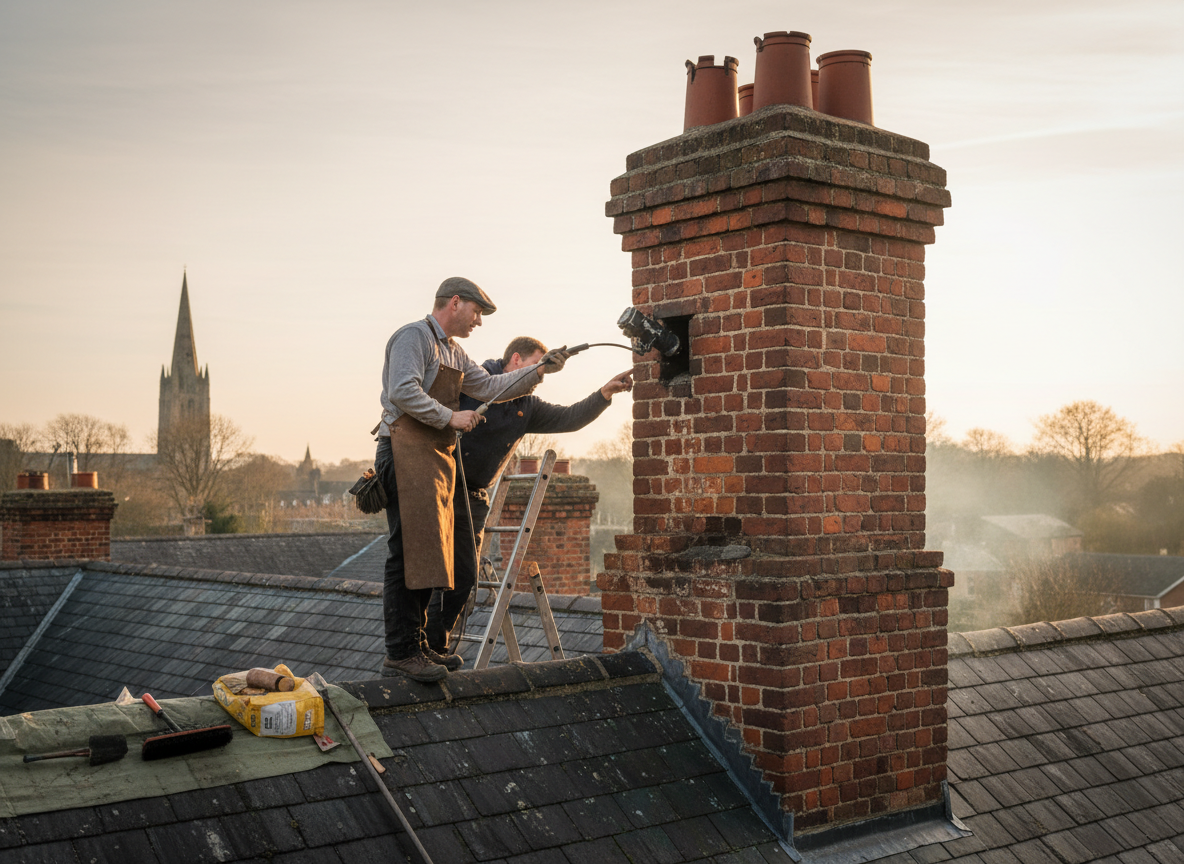
Draft problems in older Gloucester brick homes typically trace back to eroded mortar joints and cracked flue liners that allow cold air infiltration and smoke spillage. Addressing these at the source through precise tuckpointing and masonry work restores the chimney's draft efficiency within a few days once the right sections are isolated.
Common Draft Triggers in Gloucester Brick Homes
Gloucester City and surrounding neighborhoods feature many pre-1950 brick row homes and two-story structures where chimneys sit exposed to Delaware River humidity and freeze-thaw cycles. Winter winds push through hairline cracks while summer moisture softens mortar, widening gaps over repeated seasons. Homeowners notice drafts most often on the second floor near fireplaces when outside temperatures drop below 30 degrees. These patterns differ from newer construction because original lime mortar lacks modern flexibility and the brick itself absorbs water during heavy coastal rains. Inspecting from the roofline down reveals whether the issue sits in the crown, the stack, or the connection to the roof deck.
Tuckpointing and Masonry Repairs That Stop Air Leaks
Restoring the chimney stack begins with removing loose mortar to a depth of one-half inch then packing fresh mortar matched to the original color and composition. In Gloucester brick homes this step often requires scaffolding on narrow side yards common to Camden County lots. Focus first on the north and west faces that take the brunt of prevailing winds. Once tuckpointing finishes, any displaced bricks are reset with compatible mortar to maintain the original bond. This approach preserves the historic appearance while cutting air infiltration by sealing the most porous sections. Homeowners can verify results by lighting a smoke pencil at the fireplace opening after the work cures.
Flue Liner and Damper Adjustments for Consistent Draft
When mortar work alone does not resolve persistent drafts, the flue liner usually needs evaluation for gaps or spalling. Older Gloucester chimneys frequently have clay liners that crack under repeated heating and cooling. A stainless steel liner insert sized to the existing flue restores smooth airflow and prevents cold air from dropping back into the firebox. Pairing this with a new damper that seats fully eliminates the open chimney column that acts like a vent during winter. These changes also improve safety by directing combustion gases outward rather than allowing them to leak into living spaces. Local conditions near the river accelerate liner wear because of higher salt content in the air.
Ongoing Care Tied to Local Weather Patterns
Gloucester's freeze-thaw cycles and spring storms near the Delaware River make annual inspections essential before heating season begins. Check the crown and flashing after every major storm because water entry quickly undermines new mortar. Keep the damper closed when the fireplace is unused and schedule a sweep to remove creosote buildup that narrows the flue. These steps maintain the draft improvements achieved through earlier masonry work. For homes in areas like East Gloucester or West Gloucester, the same seasonal timing applies because river proximity creates similar moisture loads across the county.
When Professional Assessment Becomes Necessary
Persistent drafts after basic tuckpointing point to deeper issues such as foundation settling or roof-chimney junction failures. A full inspection from crown to cleanout identifies whether relining or crown repair will deliver the longest-lasting fix. In Gloucester City, crews familiar with local brick stock can match repairs to existing materials without altering the home's character. This targeted method keeps older homes efficient while avoiding unnecessary replacement of sound sections.