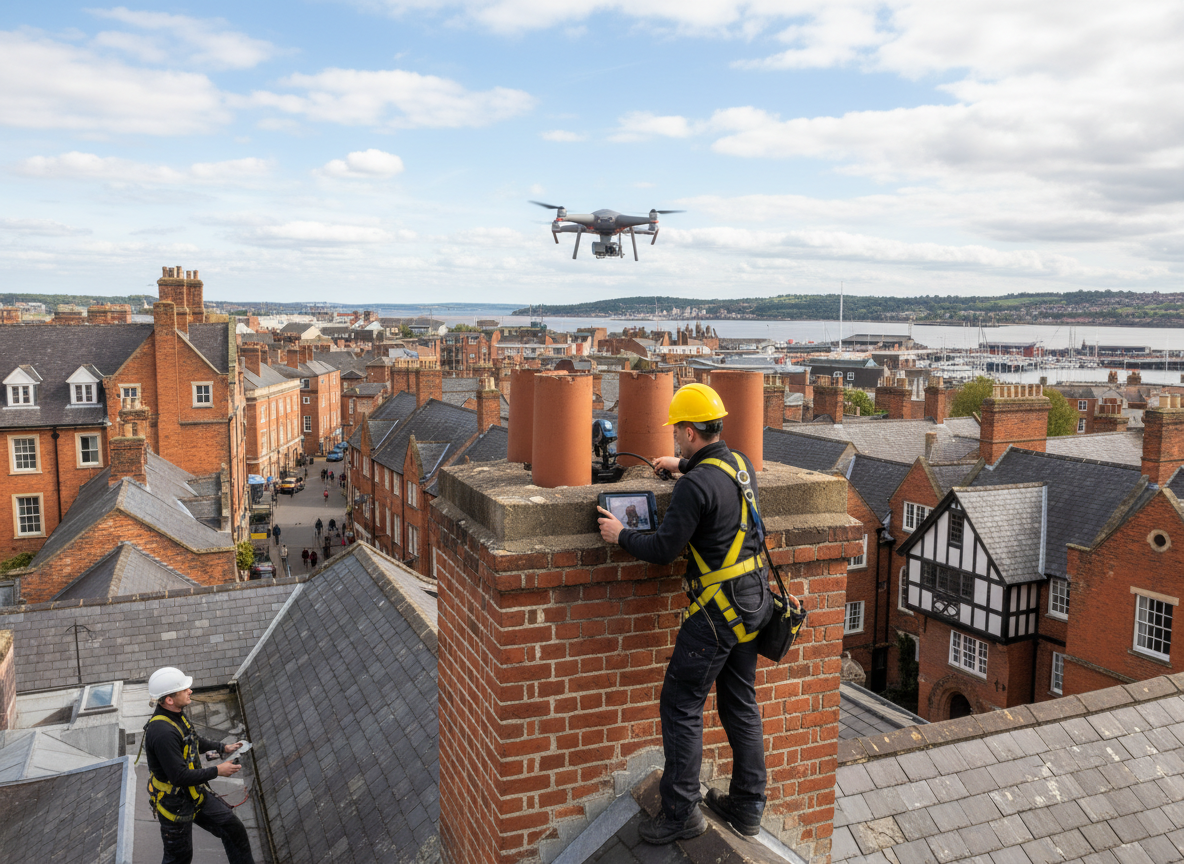
Gloucester City homes built before 1960 often feature brick chimneys tied into row-house structures along Cumberland Street and Broadway. These setups face constant freeze-thaw cycles from Delaware River humidity and winter winds that drive moisture into mortar joints. An inspection starts with a top-down visual check for spalling bricks and missing caps, followed by a flue camera run to locate creosote glazing or liner cracks that standard visual checks miss. Homeowners frequently overlook how shared flues between adjacent properties create cross-draft risks when one neighbor’s appliance runs at different times.
Camden County soil settlement around older foundations shifts chimney bases enough to open gaps at the roof line, allowing rainwater to enter and damage ceilings below. We check the crown, flashing, and rain cap condition first because these elements fail fastest in the area’s heavy spring rains. Interior inspections include damper operation and smoke chamber integrity, noting any signs of water staining that indicate ongoing leaks. The process also verifies proper clearances to combustible framing, a common issue in tightly built Gloucester blocks where additions were added over decades.
Draft problems surface most often after homeowners install new high-efficiency furnaces that vent at lower temperatures than the original coal or oil systems. This change lets condensation form inside the flue and erode mortar from the inside out. We measure draft with a manometer during the visit and note any obstructions such as bird nests or fallen brick that block airflow. Final notes include recommendations for repairs that match the original masonry rather than modern substitutes that expand differently in the local climate.
Technician insight
In Gloucester, the thing that catches most people out with chimney inspection service is how row-house chimneys built before 1950 share flues with the house next door. Soil movement along the riverbank opens hidden gaps at the base that only appear when we run the camera during a hard rain. Homeowners usually assume their single inspection covers the whole stack, but the shared section needs separate checking or the neighbor’s appliance can push smoke back into the living room.
Shared Flue Draft Issue on Cumberland Street
A Gloucester City homeowner reported occasional smoke smell on windy days. We found the chimney base had settled, opening a gap into the adjacent property’s flue. The camera showed creosote bridging the shared section. We sealed the gap from inside both flues and recommended a new cap with a divider plate. The draft stabilized and the odor stopped.
How it works
- 1
Exterior Assessment
We examine the chimney crown, bricks, mortar, flashing, and cap from the roof and ground level for visible damage or missing pieces.
- 2
Flue Camera Inspection
A camera is lowered through the flue to record liner condition, creosote buildup, and any cracks or obstructions not visible from above.
- 3
Draft and Clearance Check
Draft is measured with instruments while noting clearances to wood framing and confirming damper function.
- 4
Written Report
Findings are compiled into a clear report with photos and prioritized repair recommendations based on the specific conditions found.
Pricing
Upfront quotes provided after basic access details; cost varies with chimney height, number of flues, and roof pitch.