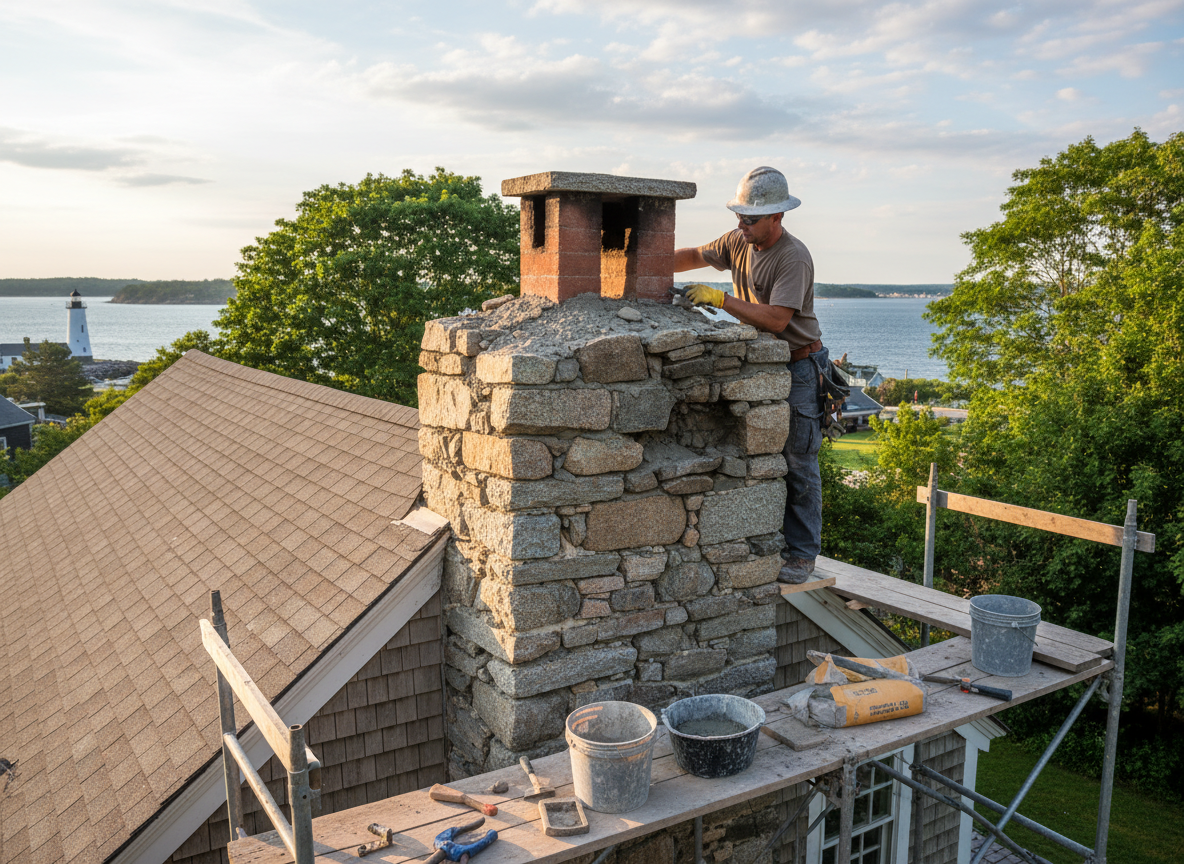
Stone chimneys in Gloucester City homes built before the 1960s often use local fieldstone or limestone set in lime mortar that has weakened over decades. Freeze-thaw cycles common to the Gloucester area pull joints apart, allowing water to enter and accelerate spalling on the south and west faces most exposed to driving rain. Homeowners frequently notice missing stones or white efflorescence after a hard winter, and waiting only increases the chance that the flue liner or crown will also fail.
Repair begins with hand removal of failed mortar without damaging the stone faces, followed by repointing using a compatible NHL 3.5 or 5 mortar mix matched to the original. Where individual stones have shifted, stainless steel ties or Dutchmen patches restore structural integrity while preserving the historic appearance typical of Gloucester neighborhoods near the Delaware River. We also address the crown and flashing transition because water entry at the roof line is the most common source of interior leaks reported in Camden County stone chimneys.
After repointing, a breathable siloxane sealer is applied once the mortar has cured to reduce future moisture absorption without trapping vapor inside the stone. Access on tight Gloucester City lots often requires scaffolding rather than ladders, and we coordinate with roofers when flashing must be lifted. Every job includes a written report noting any code concerns with the chimney height relative to the roof plane.
Technician insight
In Gloucester, the thing that catches most people out with stone chimney repair is how quickly freeze-thaw cycles in our wet winters loosen the original lime mortar in the many pre-war fieldstone chimneys around Gloucester City and Brooklawn.
Loose Fieldstone on Gloucester City Chimney
Homeowner reported missing stones after a January thaw. Inspection showed eroded mortar on the west face and water staining in the attic. We repointed the joints, reset three stones with stainless ties, and rebuilt the crown. The chimney now sheds water properly with no further movement noted.
How it works
- 1
Site Inspection
We examine the full height of the stone chimney, checking joints, crown, flashing, and any visible interior damage from the attic.
- 2
Mortar and Stone Assessment
Failed mortar is mapped and loose stones are documented so the repair plan matches the actual extent of deterioration caused by Gloucester winters.
- 3
Repointing and Stabilization
Old mortar is raked out by hand and new lime-based mortar is packed in lifts; shifted stones are reset or replaced with matching material.
- 4
Crown and Flashing Work
The crown is rebuilt or sealed and step flashing is adjusted or replaced to prevent water entry at the roof line.
- 5
Final Sealing and Review
A breathable sealer is applied and the homeowner receives a written summary of work performed and any future monitoring recommendations.
Pricing
Pricing varies with the height of the chimney, number of stones requiring reset, and whether scaffolding or roof work is needed.