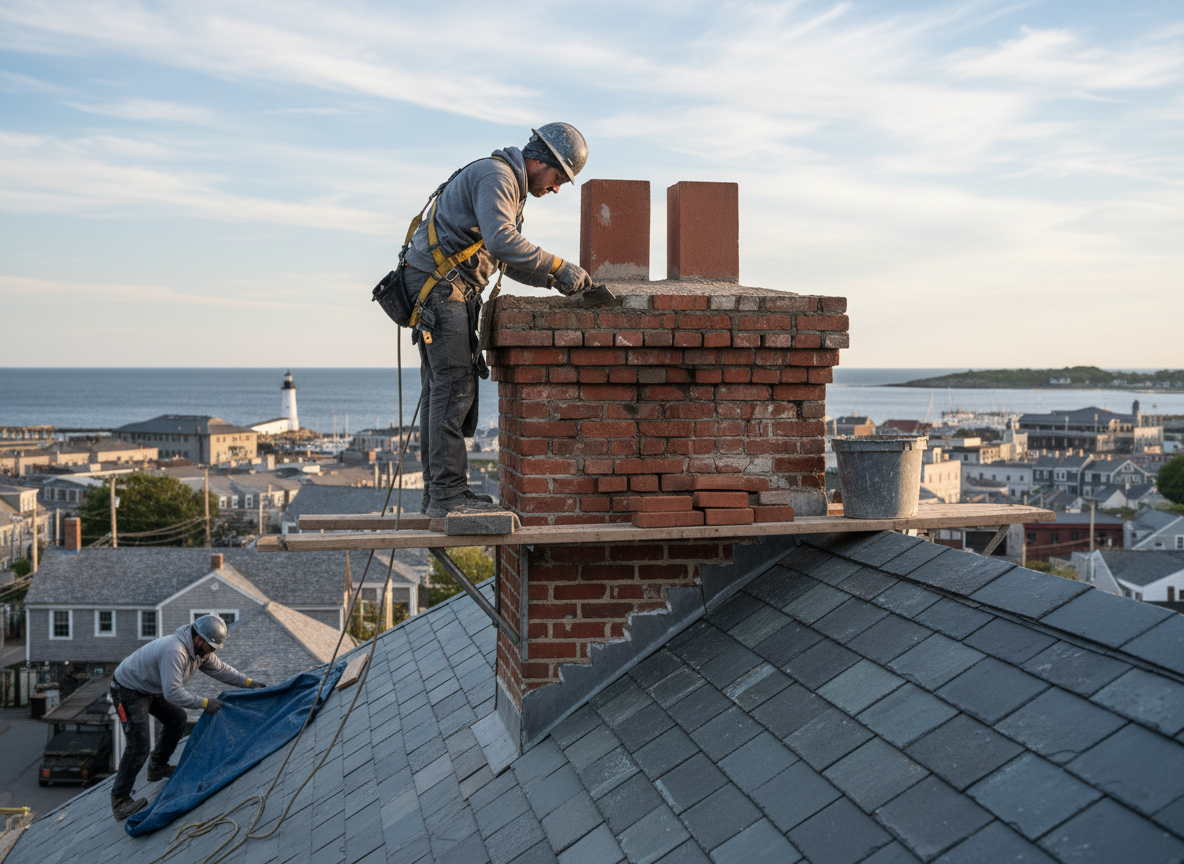
Gloucester City housing stock from the early 1900s often pairs brick chimneys with slate or asphalt roofs that have settled unevenly. When the chimney crown cracks or the step flashing lifts, water tracks under the shingles and into the attic space above the living room. Repair requires removing surrounding roofing material, installing new copper or lead-coated flashing, and re-sealing the counter flashing without disturbing the original brickwork.
Winter freeze-thaw cycles in the Gloucester area push mortar joints open along the chimney shaft where it meets the roof plane. Homeowners frequently notice interior ceiling stains after the first heavy rain following a cold snap. Proper repair includes rebuilding the crown with a reinforced concrete cap sloped to shed water and installing a cricket on the uphill side when the chimney sits more than thirty inches wide.
Edge cases appear when the chimney serves both a fireplace and a furnace vent; mixing combustion gases with roof penetrations demands separate flashing details and code-compliant clearances. Attempting a quick caulk fix on these combined systems usually fails within one season because the differential expansion between brick and metal pulls the sealant apart.
Seasonal Roof Checks
Inspect the chimney-roof junction after every major storm and again in late fall before leaves accumulate. Look for displaced flashing, dark streaks on shingles, and soft spots in the decking felt during attic checks.
Technician insight
In Gloucester the thing that catches most people out with roof chimney repair is the way early-1900s brick has already shifted against the roof deck; once you open the flashing you often find the original mortar has turned to sand and the step flashing is nailed into nothing solid.
Leaking Chimney on Monmouth Street Roof
Homeowner reported water stains on the second-floor ceiling after a March rain. Inspection showed lifted step flashing and a cracked crown on a narrow chimney serving both fireplace and oil furnace. Crew rebuilt the crown, replaced the flashing with new copper, and added a small cricket. No further leaks appeared during the next two heavy rains.
How it works
- 1
Site Assessment
Technician climbs to the roof from Gloucester City access points and documents flashing condition, crown integrity, and any adjacent shingle damage.
- 2
Material Removal
Carefully lift surrounding shingles and old flashing without disturbing the existing brick or roof deck.
- 3
Flashing and Crown Work
Install new step and counter flashing, rebuild or recast the crown, and add a cricket where roof pitch and chimney width require it.
- 4
Reintegration and Test
Replace and seal shingles, then run a water test from the ridge to confirm no penetration at the repaired joint.
Pricing
Upfront quote after roof inspection; price varies with roof pitch, chimney width, and extent of shingle replacement required.