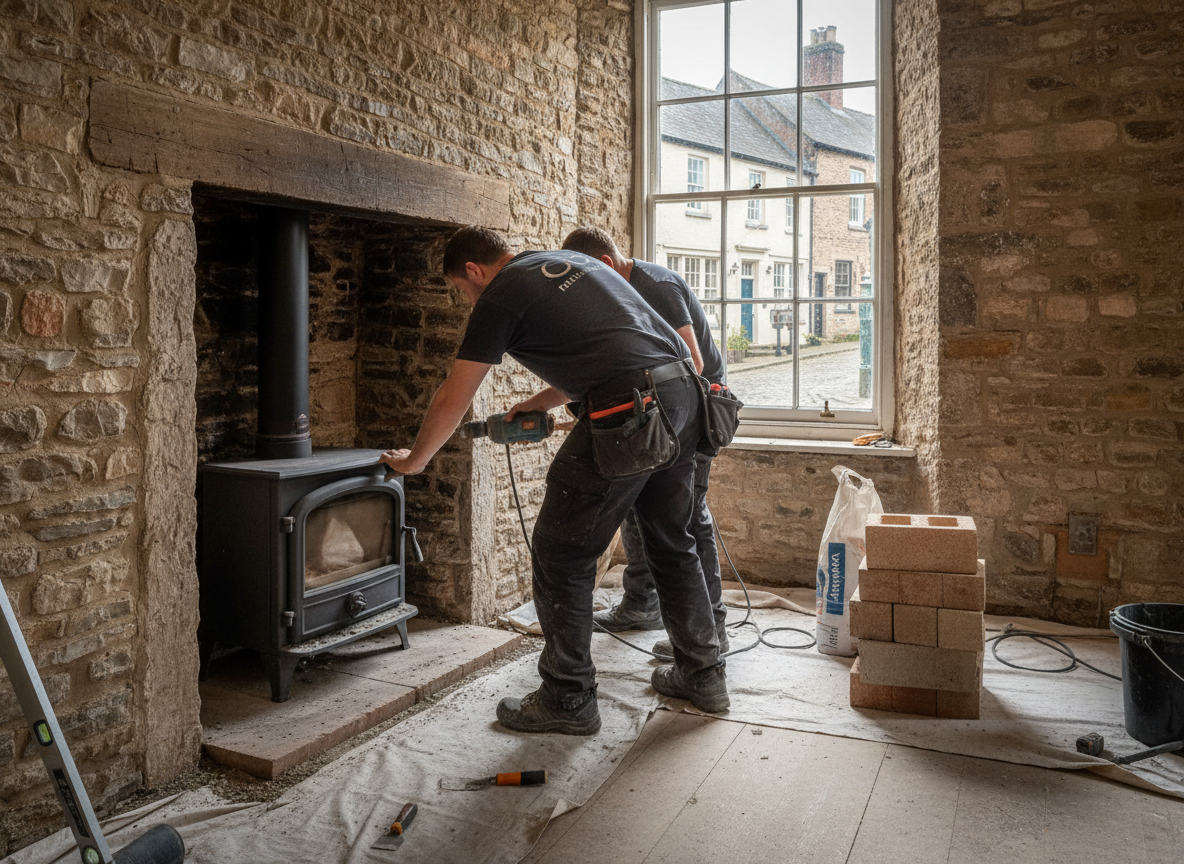
Fireplace installation in Gloucester City requires careful assessment of existing masonry chimneys common in homes built before the 1970s. Many properties along Cumberland Street and surrounding blocks have single-wall brick flues that need stainless steel liners added before any insert can be placed. Skipping this step risks creosote buildup and carbon monoxide leaks when winter temperatures stay low for weeks at a time.
Gas or wood-burning inserts must meet Camden County venting requirements and clear the proper clearances from wood framing. In Gloucester neighborhoods, narrow lots and shared walls often mean the new unit has to be sized precisely so the chimney crown and flashing remain intact. Technicians check the flue with a camera first to locate offsets or deterioration that could block proper draft.
Homeowners in Gloucester City sometimes request direct-vent models to avoid using the chimney entirely. These units still require exterior wall penetrations that account for the area's high water table and occasional flooding near the Delaware River. Proper sealing prevents moisture from entering the home and damaging the new fireplace components over time.
Technician insight
In Gloucester, the thing that catches most people out with fireplace installation is the condition of the original brick chimneys in homes near the river. Many were built with soft mortar that crumbles when you try to seat a new insert, so the job turns into a full flue rebuild before you can even light a fire. Homeowners who skip the camera inspection usually end up with draft problems the first cold snap.
Fireplace Insert Retrofit on Cumberland Street
The homeowner wanted a gas insert in a 1940s Gloucester City row home. Camera inspection showed the flue had shifted at the second floor. Crew installed a new stainless liner, sealed the crown, and fitted the insert. The unit now draws correctly and meets current venting standards.
How it works
- 1
Site Inspection
Technician measures the existing chimney, checks for structural issues, and confirms the fireplace opening size at the Gloucester City address.
- 2
Flue Preparation
Any necessary stainless liner or insulation is installed to bring the chimney up to current venting standards before the insert arrives.
- 3
Insert Placement
The new fireplace unit is positioned, connected to the gas or wood supply, and sealed at the damper area to prevent drafts.
- 4
Final Testing
Burn test or gas leak check is performed, clearances are verified, and the homeowner receives operating instructions.
Pricing
Cost depends on whether a liner is needed and the type of insert selected; older Gloucester City chimneys often require extra prep work.