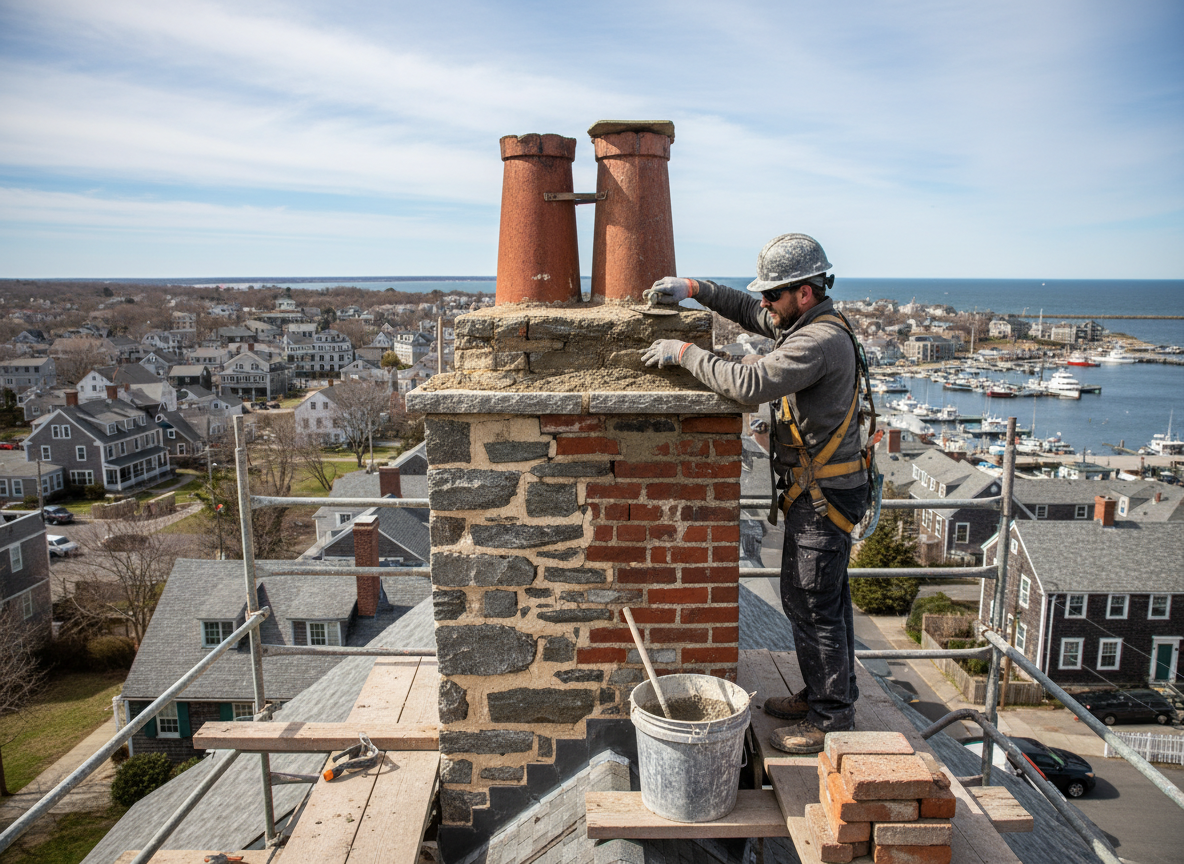
Gloucester City row homes built before 1950 often have chimneys with soft lime mortar that breaks down faster when water sits in the flue liner. The Delaware River humidity keeps masonry damp for weeks after storms, so restoration usually starts with removing failed parging and installing a stainless steel liner before repointing with type N mortar matched to the original brick.
Homeowners along Cumberland Street and in Mount Ephraim commonly see spalling on the south-facing side because afternoon sun pulls moisture through the stack and then freezes at night. We cut out the damaged courses rather than surface patching, then install a custom clay tile cap that allows the flue to breathe while blocking direct rain.
Code enforcement in Camden County requires a permit for any liner replacement that alters the flue size, and inspectors check for proper clearance to combustibles in these narrow row-home attics. Skipping the permit step has delayed sales when buyers order inspections.
Terrain along the riverfront creates runoff that pools against foundations, so we always check the chimney base for hidden water entry before starting the stack work.
Technician insight
In Gloucester, the thing that catches most people out with chimney restoration is the combination of pre-war lime mortar and constant river moisture that keeps the stack wet long after rain stops. Homeowners try to patch from the outside only and the freeze-thaw cycles just push the new mortar right back out.
Crumbling Stack on a Cumberland Street Row Home
The chimney showed open joints and water streaks inside the attic. We found the original clay liner had cracked at the roof line, letting river humidity reach the brick. After installing a new stainless liner and repointing the exposed courses, the attic stayed dry through the next three storms.
How it works
- 1
Initial Inspection
We climb the roof and examine the flue, crown, and flashing from inside the attic, noting any Gloucester-specific water staining from river humidity.
- 2
Damage Mapping
Photos and measurements document every failed joint and spalled brick so the repair plan matches the exact conditions of the stack.
- 3
Liner and Repoint
Old liner sections are removed, a new stainless liner is fitted, and mortar joints are cut out and repointed in one continuous pass.
- 4
Cap and Final Check
A new clay tile cap is set, the crown is sealed, and the system is tested for draft before the job is signed off.
Pricing
Cost depends on chimney height, liner length, and how many courses of brick need replacement. Upfront written quotes after inspection.