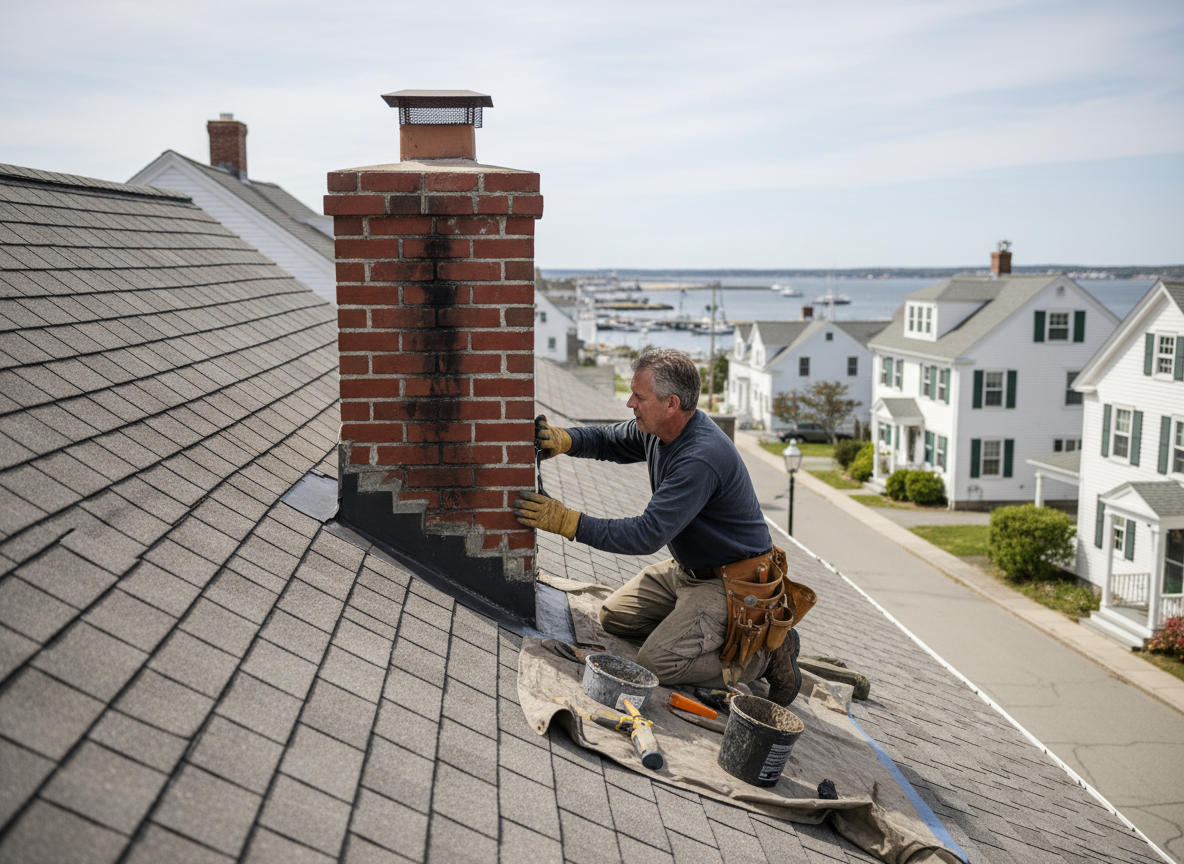
Chimney leaks in Gloucester City often start at the crown or step flashing where older masonry meets the roofline. Homes built before 1960 in neighborhoods around Cumberland Street commonly have single-wythe brick stacks with no modern liner, so water travels straight through mortar joints and stains ceilings. We inspect the crown for hairline cracks, check counter-flashing integrity, and test the flue with a camera before any repair begins. Skipping the camera step leaves hidden liner gaps that reappear after the first heavy rain.
Repair choices depend on whether the leak is at the crown, the flashing, or a deteriorated clay liner. For crown cracks we cut out the damaged concrete and repour with a reinforced cap that includes a drip edge. Flashing work means removing shingles, installing new step flashing, and sealing with high-temp butyl tape rated for New Jersey winters. When the liner is the culprit we either reline with a stainless insert or repair isolated sections with refractory cement, always verifying draft afterward so the fix does not create a new carbon-monoxide risk.
Access on tight Gloucester City lots often requires scaffolding on the side yard rather than a full roof setup. We protect slate or asphalt roofs with plywood walk boards and remove only the minimal number of shingles needed. After the repair we run a water test from the top and check interior ceilings with a moisture meter to confirm the leak path is sealed. Homeowners receive photos of every step and a written note on what to watch for during the next freeze-thaw cycle.
Technician insight
In Gloucester the thing that catches most people out with chimney leak repair is how quickly water finds the old mortar joints in pre-1960 brick stacks around Gloucester City; homeowners notice ceiling stains but miss the hairline crown cracks that open wider every winter.
Crown Crack on a Gloucester City Row Home
Water was staining the second-floor ceiling after every rain. We found a cracked crown and failed step flashing on the 1920s brick chimney. We repoured the crown with a reinforced cap and replaced the flashing, then ran a water test that showed no further intrusion.
How it works
- 1
Site Inspection
We arrive at your Gloucester City address, climb the roof, and examine the crown, flashing, and liner with a camera.
- 2
Leak Source Diagnosis
Moisture meter readings and camera footage pinpoint whether the leak is at the crown, flashing, or liner.
- 3
Targeted Repair
We repour the crown, replace flashing, or install a stainless liner section using materials suited to local freeze-thaw conditions.
- 4
Water Test and Cleanup
A controlled water test confirms the fix; we then restore shingles and remove all debris from the yard.
Pricing
Cost depends on access, extent of masonry or liner damage, and whether scaffolding is required; we provide an upfront quote after inspection.