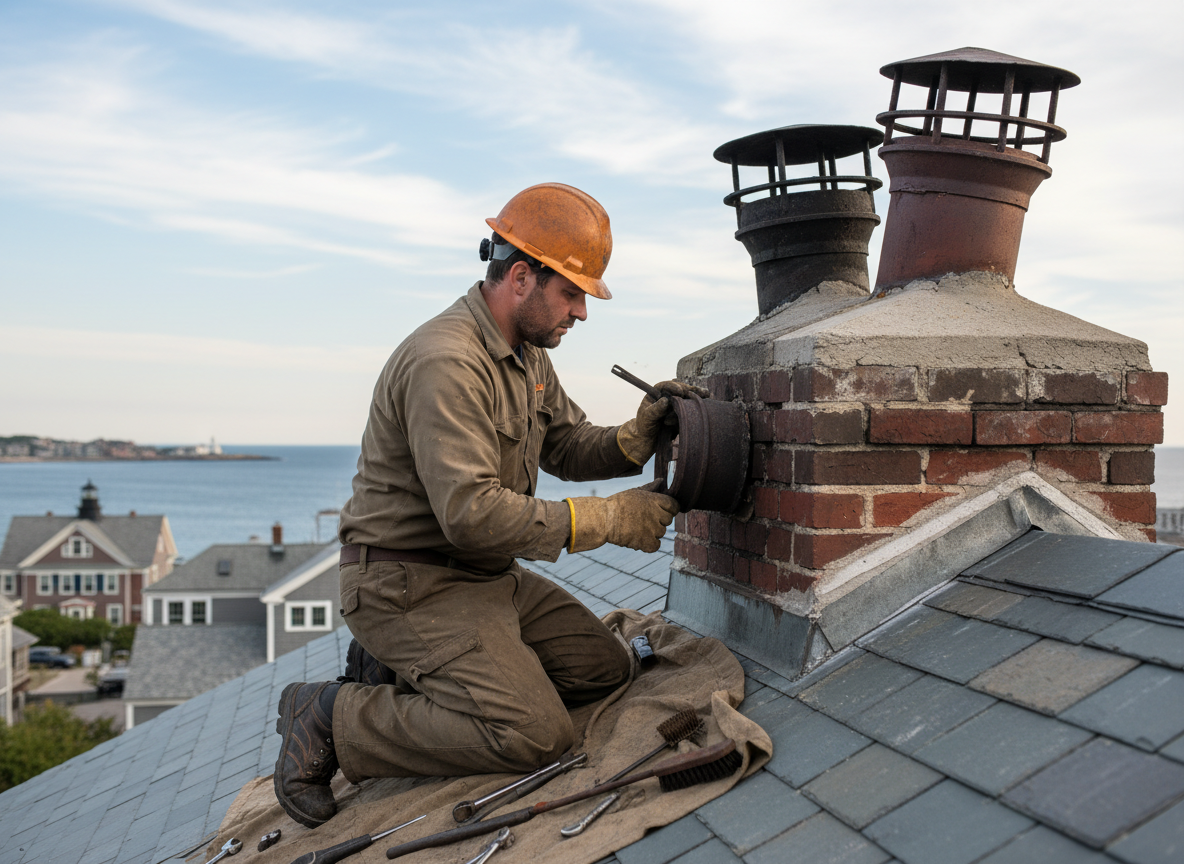
Chimney dampers in Gloucester City homes often fail from years of wood smoke and winter freeze-thaw cycles that rust the metal plate and warp the frame. Many row houses along Cumberland Street and surrounding blocks still use the original cast-iron or steel dampers installed decades ago. When the damper no longer closes tightly, cold air pours down the flue and heated air escapes, raising heating costs and letting moisture reach the masonry. Access is frequently tight because these chimneys sit between shared walls, so technicians must work from the firebox without removing surrounding brick.
Edge cases include dampers seized in the open position after a bird nest or creosote buildup blocks the pivot rod. In Gloucester’s older stock, the smoke chamber above the firebox can be undersized, leaving little room to maneuver replacement parts without cutting into the flue tile. Code requires the damper to seal when closed; a visible gap of even a quarter inch fails inspection in many cases. Technicians carry both top-sealing and traditional throat dampers to match the existing masonry without enlarging the opening.
Homeowners sometimes attempt to oil a stuck pivot from inside the firebox, which only attracts more soot and makes future service harder. Proper repair starts with a camera inspection to confirm the flue lining condition before any new hardware is installed. Once the old damper is removed, the throat is cleaned and the new unit is bedded in refractory mortar so it stays aligned with the flue walls. Final testing uses a smoke pencil to verify the seal before the job is complete.
Technician insight
In Gloucester, the thing that catches most people out with chimney damper repair is how the shared brick walls in row homes along Cumberland Street limit side access, forcing all work from inside the firebox and making even a simple pivot replacement take twice as long as it would in a standalone house.
Stuck damper on a Gloucester City row home
The homeowner reported cold drafts and difficulty starting fires. Inspection showed the original steel damper rusted in the open position with heavy creosote locking the pivot. We removed the seized unit from the firebox, cleaned the throat, and installed a new top-sealing damper that fit the existing flue dimensions. The seal tested tight and the homeowner regained control of the draft.
How it works
- 1
Initial inspection
Camera scan from the firebox to check damper condition, flue alignment, and any creosote or nesting issues.
- 2
Access and removal
Remove the existing damper plate and hardware while protecting the firebox and surrounding masonry.
- 3
Throat preparation
Clean the smoke chamber and bed the new damper frame in refractory mortar for a lasting seal.
- 4
Installation and test
Install the replacement damper, verify full open and closed travel, and confirm airtight closure with a smoke test.
Pricing
Upfront quotes provided after inspection; cost depends on damper type and access difficulty in older Gloucester City chimneys.