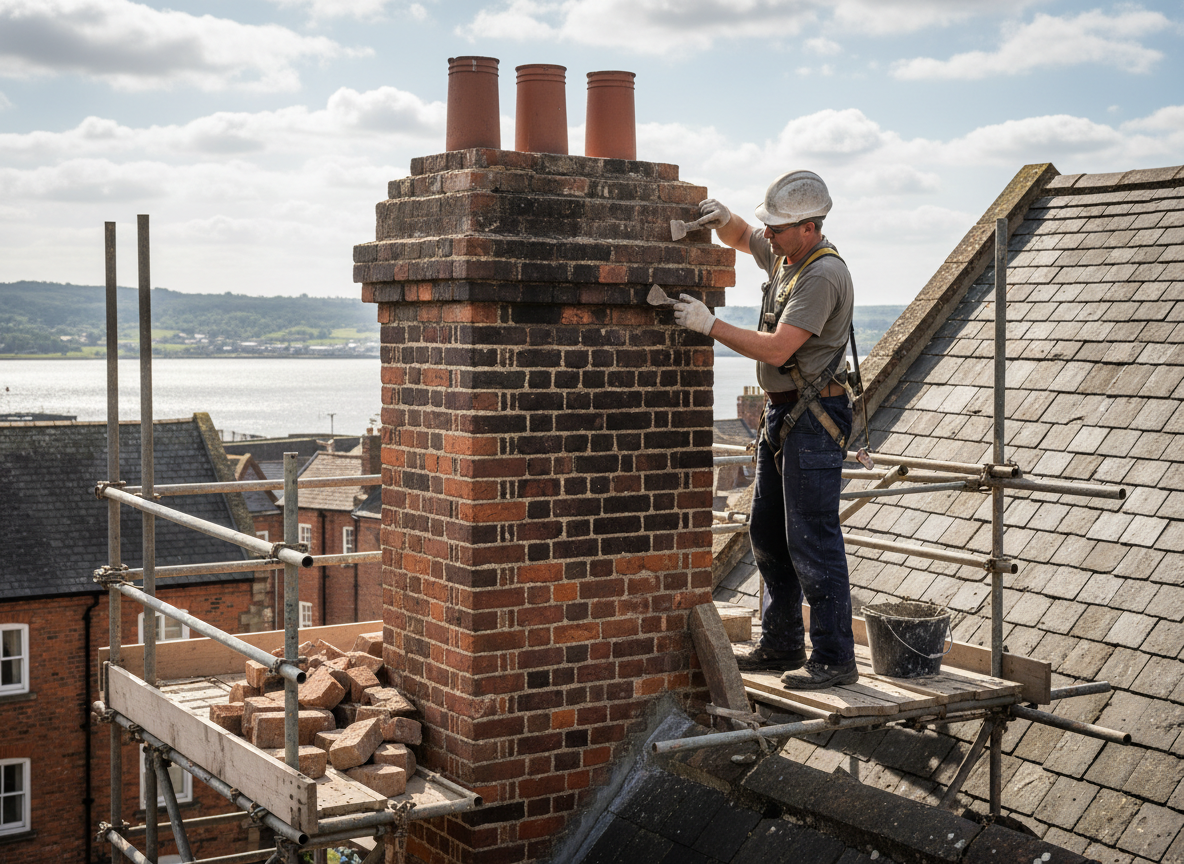
Gloucester City neighborhoods around Cumberland Street and along the Delaware River hold many two-story brick row homes and detached houses from the 1920s through 1950s. Their chimneys were built with soft common brick and lime mortar that now shows widespread spalling and eroded joints after decades of exposure. Winter freeze-thaw cycles push moisture deeper into the masonry, causing face brick to flake and flue liners to crack. Summer humidity keeps the stack damp, accelerating mortar washout at the crown and flashing line.
Repair starts with selective tuckpointing using type N mortar matched to the original compressive strength rather than modern high-strength mixes that can damage surrounding brick. Where individual bricks have crumbled we cut them out and install salvaged or new water-struck brick to maintain the historic appearance required in many Gloucester City blocks. Flashing is renewed with lead or copper step flashing bedded into raked joints instead of relying on caulk that fails within two seasons. We also install a new chimney cap with a drip edge that directs water away from the brick rather than letting it pool on the crown.
Homeowners often overlook the condition of the chimney base where it passes through the roof deck. In Gloucester’s flat terrain and older housing stock, roof leaks at the cricket or back pan commonly saturate the masonry from the inside out. We open the roof as needed to inspect and replace rotted sheathing before repointing the lower courses. This prevents recurring interior water stains that many owners mistake for a simple roof leak.
NJ residential code requires permits for chimney work that affects structure or fire safety. We pull the necessary Gloucester City permits and schedule the required inspections so the repair meets current standards for seismic bracing and spark arrestors. Skipping this step can complicate future home sales in the area.
Technician insight
In Gloucester, the thing that catches most people out with brick chimney repair is how the old row homes along the river side have chimneys that lean slightly from decades of settling on the fill soil. Once you start repointing you often find the flue has shifted and you have to sister new brick to keep the stack plumb instead of just filling joints.
Spalled Brick on Cumberland Street Chimney
Homeowner noticed white powder and missing mortar on the north face. Inspection showed multiple courses of face brick had spalled from repeated freeze-thaw cycles and a failed cricket flashing. We cut out the damaged brick, repointed the stack with type N mortar, installed new copper flashing, and added a proper cap. The chimney now sheds water cleanly and the interior leaks stopped.
How it works
- 1
Site Assessment
We examine the full chimney stack from roof to cleanout, checking for spalled brick, missing mortar, and water intrusion points specific to Gloucester City construction.
- 2
Masonry Preparation
Failed joints are raked to sound mortar depth and individual bricks are removed where needed, preserving original brickwork wherever possible.
- 3
Repair Execution
Tuckpointing, brick replacement, and new flashing are installed using materials suited to the age and exposure of Gloucester homes.
- 4
Final Inspection
We verify water shedding, clean the work area, and confirm the repair meets local code requirements before leaving the site.
Pricing
Upfront quotes provided after on-site inspection; cost driven by chimney height, extent of brick damage, and roof access needs.